(from npr.org)
A quick thought here. The institution I’m at charges $13,000 or so a year in tuition. EdX, the new MOOC darling, costs zero. Or at least that’s what you hear.
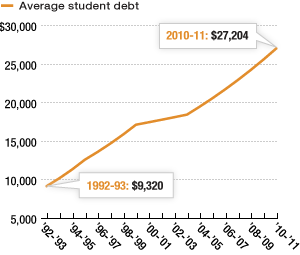
But that’s a rotten comparison, really. If you planned to use EdX for an undergraduate education, you’d have to feed and clothe yourself during that time without having an income. That’s why when people talk about student debt and the student debt crisis they don’t separate out room and board debt from “educational” debt. It’s all debt associated with an individual’s education.
At a college, this expense shows up as room and board, and while there are gaps that require some other place to live over Thanksgiving break and Christmas, it’s a pretty good estimate of is required to pursue a university education eight months a year, being roughly equal to what our off-campus students pay. At Keene, that cost is about $9,000 a year (assuming work is found over the summer).
So getting your four years of edX certificates is going to cost you $36,000 with no real possibility of discounts (room and board is pretty fixed), and currently no chance of federal aid. Getting a Keene State degree is going to cost you more — $88,000 list price — but tuition discounting and federal aid will bring that down considerably.
This doesn’t even get into opportunity cost, textbooks, and other factors. And, of course, we could do a much more detailed comparison. But the point is that education at a “marginal cost of zero” is a myth that only exists from the perspective of the educational institution. From the point of view of an undergraduate, education is always moderately expensive. With that as a given, the main financial concern is not going to be whether MOOC offers an education for $36,000 versus $88,000 — it’s going to be whether the $36,000 invested in the supposedly “free” course translates into increased opportunities for the future, relative to the investment made in it, and whether it does that reliably.


 Hapgood
Leave a reply to quibids unboxing Cancel reply